


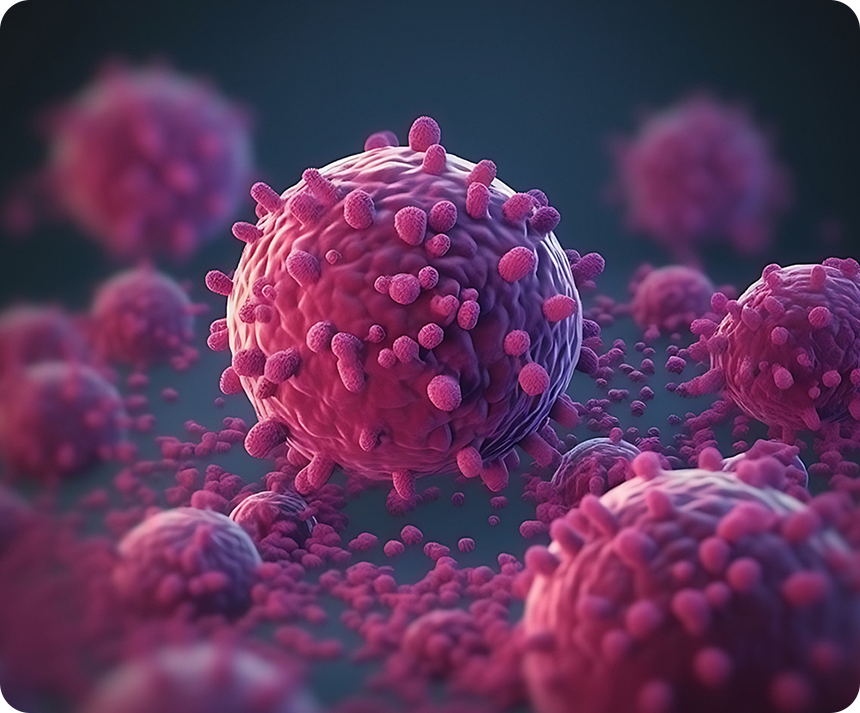
Basic research on tumor immunology focuses on the interaction mechanisms between tumors and the immune system. By deciphering key issues such as immune escape and immune cell function regulation, it provides new targets and theoretical support for immunotherapy. Recent achievements concentrate on immune regulatory molecules, cell subset functions, and novel action mechanisms.
Tumor Immune Escape Mechanisms: Tumor cells inhibit the killing function of T cells and NK cells by expressing "don't eat me" signals (e.g., PD-L1, CD47) or secreting immunosuppressive factors (e.g., TGF-β, IL-10). Recent studies reveal that exosomes released by tumor cells can carry PD-L1 to remotely suppress systemic immune responses, offering new ideas for the development of exosome-targeted drugs.
Immune Cell Subset Function Regulation: CD8+ T cells are the core force for tumor killing, and their exhausted state (expressing inhibitory receptors such as PD-1, Tim-3) is the key to immunotherapy resistance. Research shows that transcription factor TOX is the "switch" for T cell exhaustion—knocking out TOX can restore T cell killing activity. Additionally, metabolic reprogramming of regulatory T cells (Treg) (e.g., dependence on fatty acid oxidation) enables their continuous survival in the tumor microenvironment; targeting this metabolic feature can enhance anti-tumor immunity.
Novel Immune Regulatory Molecules & Targets: Beyond classic pathways like PD-1/PD-L1 and CTLA-4, inhibitory receptors (e.g., NKG2A, LAG-3) and innate immune pathway molecules (e.g., STING, cGAS) have been discovered in recent years. Among them, STING agonists can activate dendritic cells and enhance antigen-presenting capacity, and are currently in the preclinical research stage.
Interactions Between Tumor Microbiome & Immunity: Gut microbiota regulates systemic immune responses through metabolites (e.g., short-chain fatty acids). Specific microbiota (e.g., Bifidobacterium, Akkermansia) can enhance the efficacy of PD-1 inhibitors. Basic research confirms that microbiota imbalance leads to immune tolerance, while microbiota transplantation can reshape the anti-tumor immune microenvironment.
These basic studies provide multiple breakthrough directions for tumor immunotherapy, such as TOX-targeted small-molecule inhibitors, combined therapy of STING agonists with PD-1 inhibitors, and microbiota regulation-based combination regimens. In the future, precise targeting of immune regulatory pathways is expected to solve problems like immunotherapy resistance and limited applicable populations, promoting the transformation of tumor treatment towards personalization and precision.
Related Resource Links



Related Promotional Journal Downloads


Explore Our Recommended Popular Products
More products

30,000+ high- quality products available online
Primary Antibodies, Secondary Antibodies, mIHC Kits, ELISA Kits, Proteins, Molecular Biology Products,Cell Lines,Reagents ...
Contact Us
-

400-801-6722
-

support@lamarck.cn
-


Order
-

Message