


cGMP-PKG signaling pathway
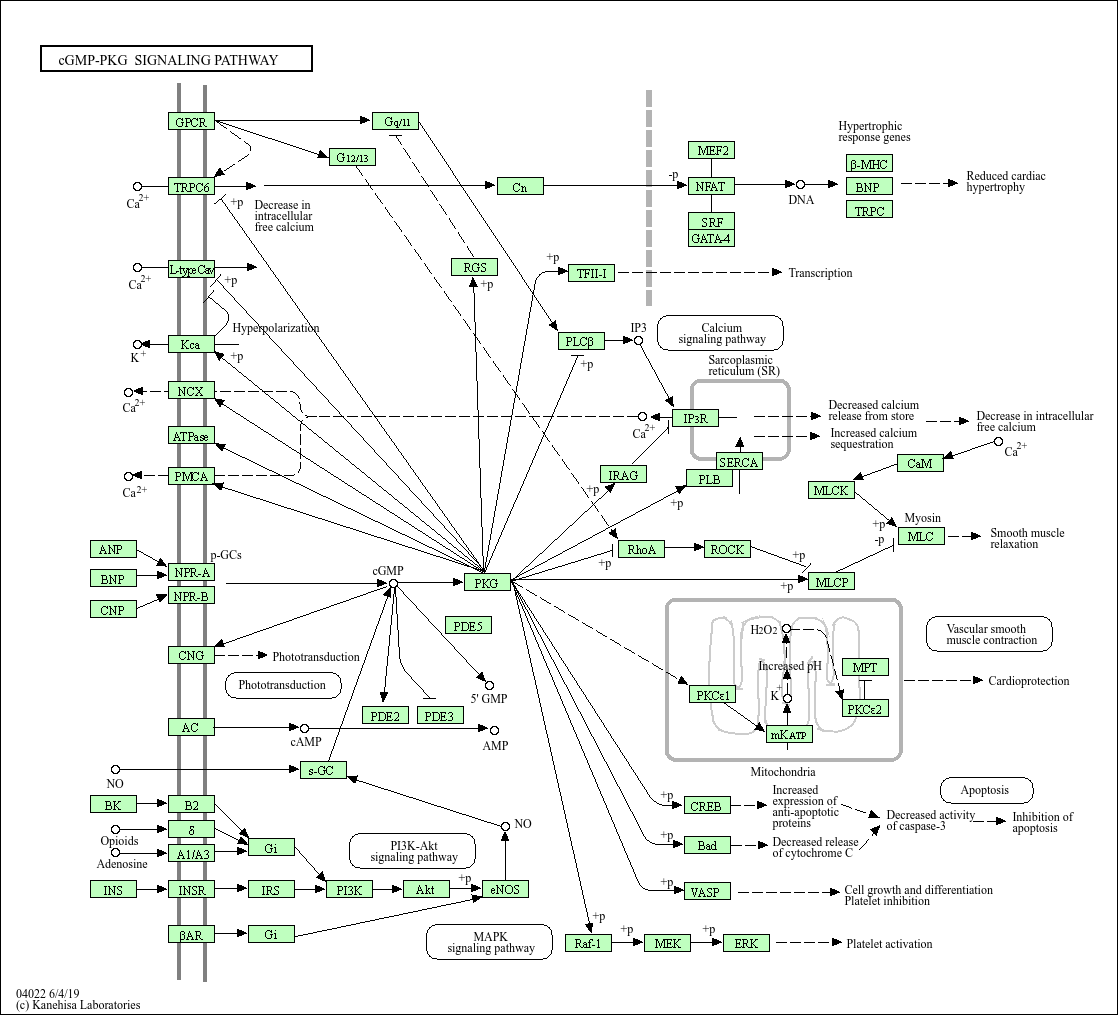
A signal pathway with cGMP as the second messenger, mainly involved in cardiovascular system regulation and cellular function modulation. There are two pathways for cGMP generation: soluble guanylyl cyclase (sGC) is activated by NO to catalyze GTP into cGMP; membrane-bound guanylyl cyclase (pGC) is activated by ligands such as atrial natriuretic peptide (ANP). cGMP binds to and activates protein kinase G (PKG), which phosphorylates downstream substrates, regulating vascular smooth muscle relaxation (reducing intracellular Ca²⁺ concentration), inhibiting platelet aggregation, regulating myocardial contractility, and maintaining renal water-electrolyte balance. Core physiological functions include maintenance of cardiovascular homeostasis and blood pressure regulation; abnormalities are associated with hypertension, heart failure, and erectile dysfunction. Nitrate drugs (releasing NO to activate sGC) and sildenafil (inhibiting PDE5 to reduce cGMP degradation) both exert therapeutic effects through this pathway.
Core function: Use cGMP as the second messenger to regulate metabolism, vasodilation, smooth muscle contraction, and cell proliferation, participating in the maintenance of cardiovascular homeostasis. Key regulatory molecules: GC (guanylyl cyclase), PKG, cGMP, PDE5, NO.
Core function: Use cGMP as the second messenger to regulate metabolism, vasodilation, smooth muscle contraction, and cell proliferation, participating in the maintenance of cardiovascular homeostasis. Key regulatory molecules: GC (guanylyl cyclase), PKG, cGMP, PDE5, NO.
Product list
-
{{item.title}}{{item.react}}{{item.applicat}}
Product list
Product name
Reactivity
Application
Related Resource Links


Related Promotional Journal Downloads


Explore Our Recommended Popular Products
More products

30,000+ high- quality products available online
Primary Antibodies, Secondary Antibodies, mIHC Kits, ELISA Kits, Proteins, Molecular Biology Products,Cell Lines,Reagents ...
Contact Us
-

400-801-6722
-

support@lamarck.cn
-


Order
-

Message