


HIF-1 signaling pathway
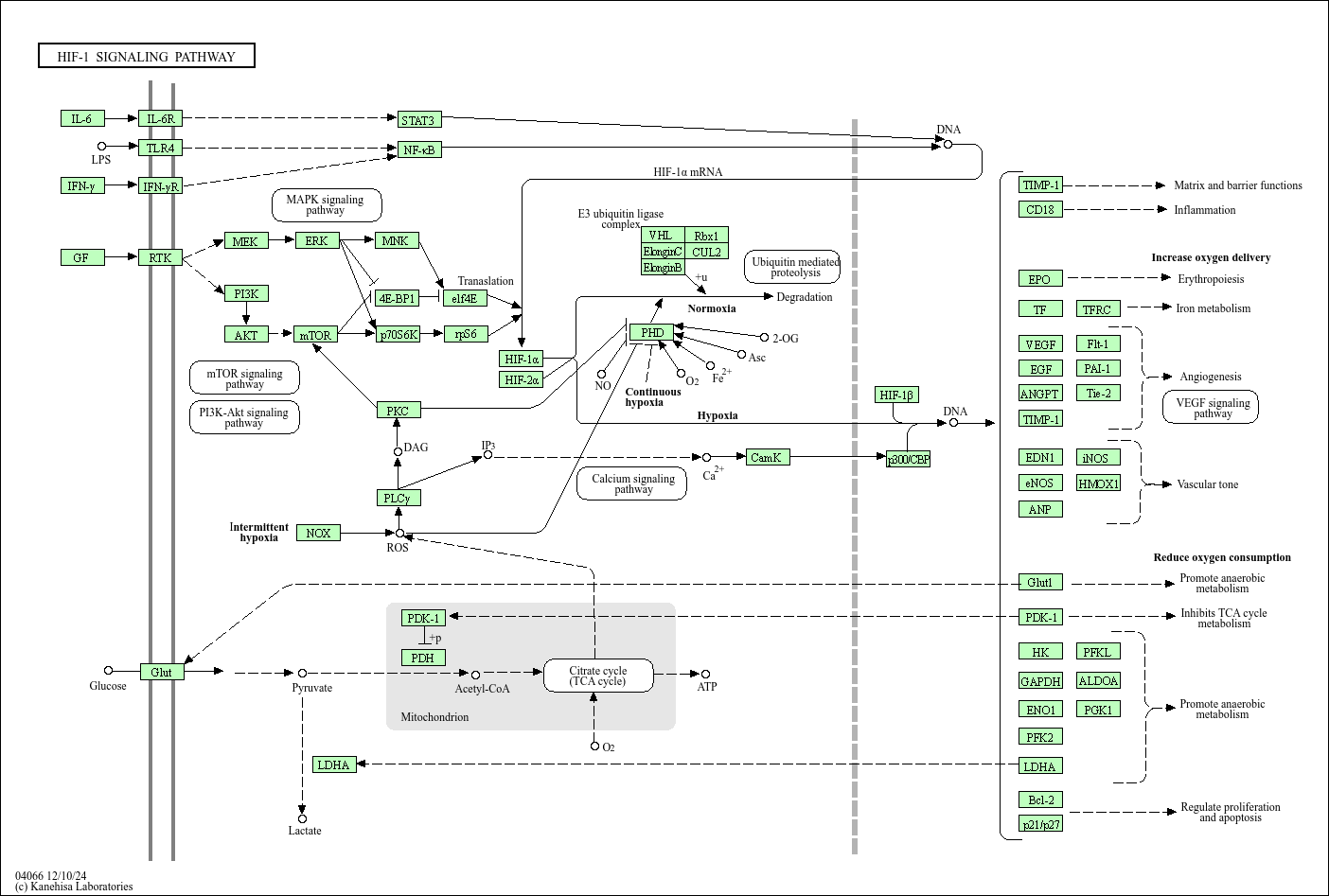
A core pathway sensing cellular hypoxic stress, with core molecules being HIF-1α and HIF-1β heterodimers. Under normoxic conditions, HIF-1α is hydroxylated by Prolyl hydroxylase (PHD) and then ubiquitinated and degraded by VHL; under hypoxia, PHD activity is inhibited, HIF-1α is stabilized and binds to HIF-1β, translocating to the nucleus to regulate the expression of hundreds of downstream target genes. Core target genes include glycolysis-related enzymes (GLUT1, LDHA), angiogenesis factors (VEGF), and erythropoiesis-related factors (EPO). By promoting glycolytic energy supply, inducing angiogenesis, and enhancing hypoxic adaptation, it maintains cell survival in hypoxic environments. The pathway plays a role in physiological processes such as embryonic development and high-altitude adaptation; abnormal activation is associated with tumor metabolic reprogramming, myocardial ischemia-reperfusion injury, and chronic obstructive pulmonary disease, making it an important target for anti-tumor angiogenesis therapy.
Core function: Sense hypoxic stress to initiate adaptive responses, regulating glycolysis and angiogenesis-related gene expression for metabolic reprogramming. Key regulatory molecules: HIF-1α/β, VHL, Prolyl hydroxylase, GLUT1, VEGF.
Core function: Sense hypoxic stress to initiate adaptive responses, regulating glycolysis and angiogenesis-related gene expression for metabolic reprogramming. Key regulatory molecules: HIF-1α/β, VHL, Prolyl hydroxylase, GLUT1, VEGF.
Product list
-
{{item.title}}{{item.react}}{{item.applicat}}
Product list
Product name
Reactivity
Application
Related Resource Links



Related Promotional Journal Downloads


Explore Our Recommended Popular Products
More products

30,000+ high- quality products available online
Primary Antibodies, Secondary Antibodies, mIHC Kits, ELISA Kits, Proteins, Molecular Biology Products,Cell Lines,Reagents ...
Contact Us
-

400-801-6722
-

support@lamarck.cn
-


Order
-

Message