


Dopaminergic synapse
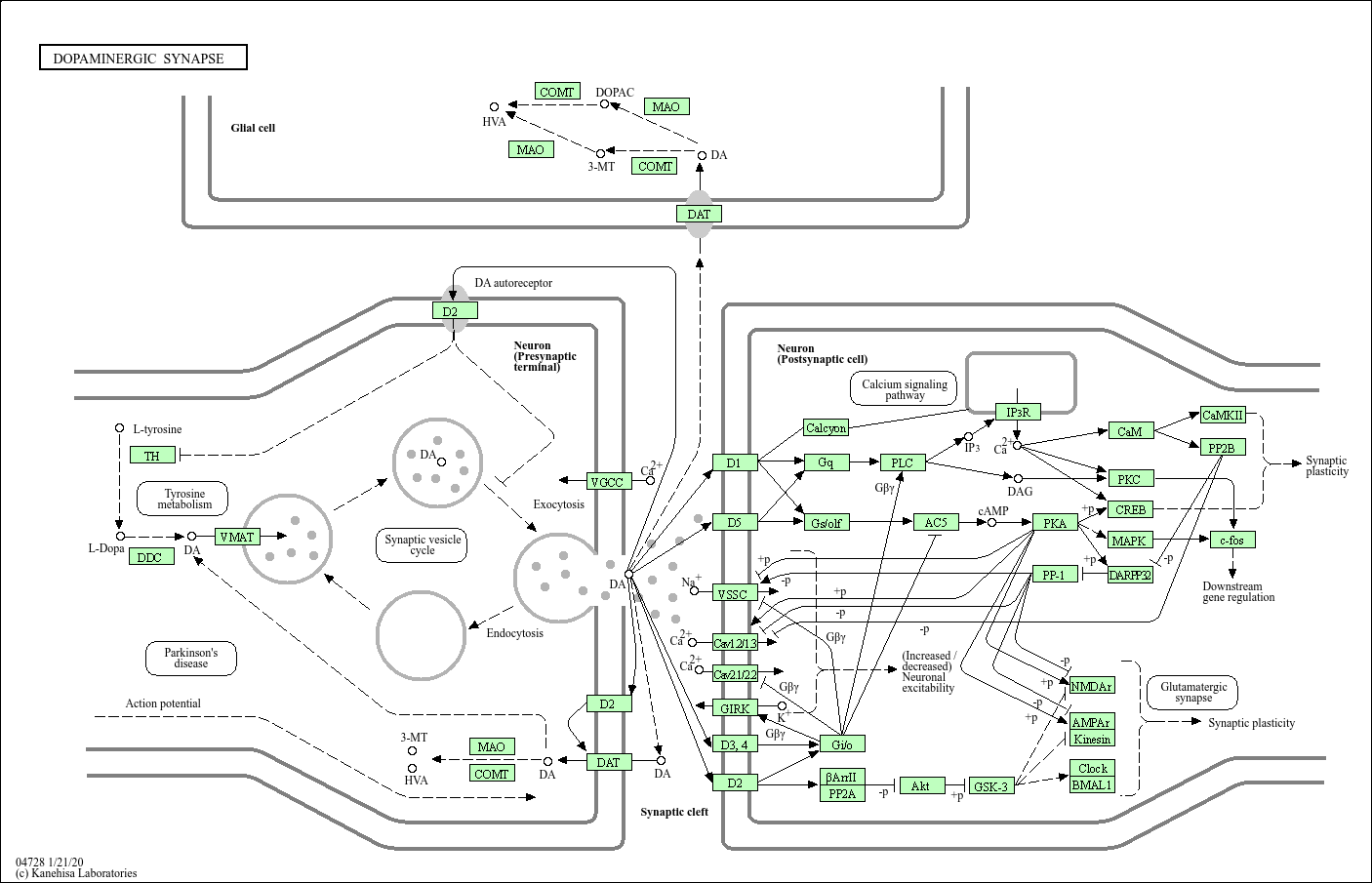
Core of basic research: Focuses on the molecular mechanism of synaptic transmission by dopamine (DA) regulating motor function, emotion, reward mechanisms, and cognition, a key neurotransmitter pathway in the central nervous system. Dopaminergic neurons synthesize DA in the soma (via tyrosine hydroxylation by TH and decarboxylation by AADC) and store it in synaptic vesicles. Upon neuronal excitation, vesicles release DA into the synaptic cleft via exocytosis. DA binds to postsynaptic dopamine receptors (D1-D5): D1/D5 receptors (Gs-coupled) activate AC to increase cAMP production and PKA, regulating ion channel activity and gene transcription to mediate excitatory effects; D2/D3/D4 receptors (Gi-coupled) inhibit AC to reduce cAMP production, mediating inhibitory effects. DA in the synaptic cleft is reuptaken into presynaptic neurons via the dopamine transporter (DAT) for recycling or degradation. Research focuses on the regulation of DA synthesis and storage, signal transduction differences among dopamine receptors, DAT reuptake mechanisms, and pathway abnormalities in neuropsychiatric diseases (Parkinson’s disease, dopaminergic neuron degeneration; schizophrenia, excessive D2 receptor activation; addiction, abnormal DA release in reward pathways).
Core key proteins: Dopamine (DA), dopamine receptors (D1-D5 subtypes), tyrosine hydroxylase (TH, rate-limiting enzyme for DA synthesis), AADC (aromatic L-amino acid decarboxylase), dopamine transporter (DAT), Synaptotagmin (mediating exocytosis), Gs/Gi proteins (receptor-coupled proteins), AC (adenylyl cyclase), cAMP, PKA (protein kinase A), DARPP-32 (dopamine- and cAMP-regulated phosphoprotein), MAPK (ERK, involved in gene transcription), synaptic vesicles (VAMP/SNAP-25/Syntaxin, mediating membrane fusion).
Core key proteins: Dopamine (DA), dopamine receptors (D1-D5 subtypes), tyrosine hydroxylase (TH, rate-limiting enzyme for DA synthesis), AADC (aromatic L-amino acid decarboxylase), dopamine transporter (DAT), Synaptotagmin (mediating exocytosis), Gs/Gi proteins (receptor-coupled proteins), AC (adenylyl cyclase), cAMP, PKA (protein kinase A), DARPP-32 (dopamine- and cAMP-regulated phosphoprotein), MAPK (ERK, involved in gene transcription), synaptic vesicles (VAMP/SNAP-25/Syntaxin, mediating membrane fusion).
Product list
-
{{item.title}}{{item.react}}{{item.applicat}}
Product list
Product name
Reactivity
Application
Related Resource Links


Related Promotional Journal Downloads


Explore Our Recommended Popular Products
More products

30,000+ high- quality products available online
Primary Antibodies, Secondary Antibodies, mIHC Kits, ELISA Kits, Proteins, Molecular Biology Products,Cell Lines,Reagents ...
Contact Us
-

400-801-6722
-

support@lamarck.cn
-


Order
-

Message