


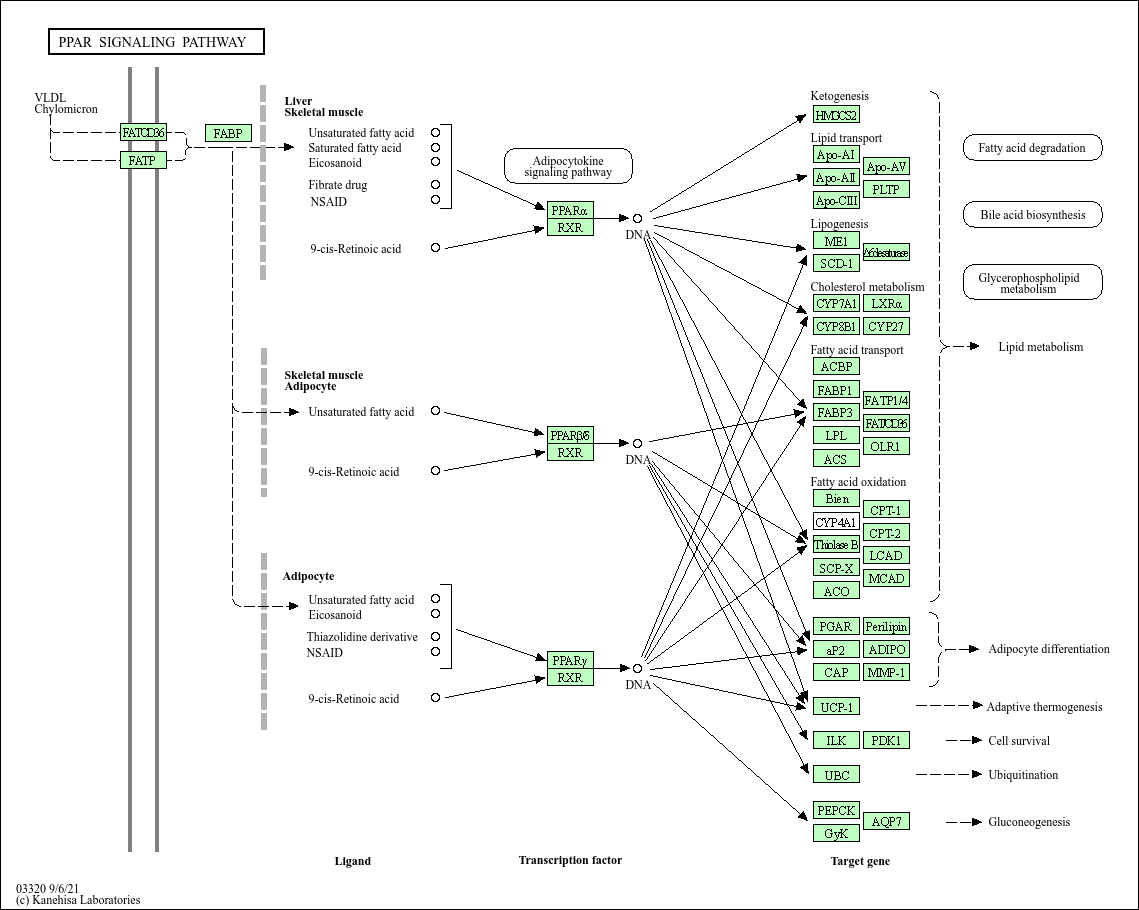
PPAR signaling pathway
Core of basic research: Clarifies the molecular mechanism by which PPAR family nuclear receptors (PPARα, PPARγ, PPARδ) regulate metabolism, inflammation, and cell differentiation, an important target pathway for metabolic disease treatment. As ligand-activated nuclear receptors, PPARs form heterodimers with retinoic X receptors (RXR) and bind to peroxisome proliferator response elements (PPRE) in target gene promoters to regulate transcription: PPARα, mainly expressed in the liver and muscle, promotes fatty acid oxidation and lowers blood lipids when activated by ligands (fatty acids, fibrates); PPARγ, mainly expressed in adipocytes, promotes adipocyte differentiation and enhances insulin sensitivity when activated by ligands (thiazolidinediones, fatty acids); PPARδ is widely expressed, participating in energy metabolism and anti-inflammatory responses. Research focuses on the tissue-specific functions of PPAR subtypes, differences between natural (fatty acids, prostaglandins) and synthetic ligands, transcriptional regulation of PPAR-RXR heterodimers, associations with metabolic syndrome (obesity, diabetes, hyperlipidemia), and therapeutic applications/side effects of PPAR agonists.
Core key proteins: PPARα/γ/δ (peroxisome proliferator-activated receptors), RXR (retinoic X receptor, heterodimer partner), fatty acids/prostaglandins (natural ligands), fibrates/thiazolidinediones (synthetic ligands), PPRE (peroxisome proliferator response element), CPT1 (carnitine palmitoyltransferase 1, key fatty acid oxidation enzyme), Adiponectin (PPARγ target gene), GLUT4 (glucose transporter), TNF-α/IL-6 (inflammatory factors, inhibited by PPARγ), AP2 (adipocyte marker, PPARγ target gene), LPL (lipoprotein lipase, key lipid metabolism enzyme).
Core key proteins: PPARα/γ/δ (peroxisome proliferator-activated receptors), RXR (retinoic X receptor, heterodimer partner), fatty acids/prostaglandins (natural ligands), fibrates/thiazolidinediones (synthetic ligands), PPRE (peroxisome proliferator response element), CPT1 (carnitine palmitoyltransferase 1, key fatty acid oxidation enzyme), Adiponectin (PPARγ target gene), GLUT4 (glucose transporter), TNF-α/IL-6 (inflammatory factors, inhibited by PPARγ), AP2 (adipocyte marker, PPARγ target gene), LPL (lipoprotein lipase, key lipid metabolism enzyme).
Product list
-
{{item.title}}{{item.react}}{{item.applicat}}
Product list
Product name
Reactivity
Application
Related Resource Links



Related Promotional Journal Downloads


Explore Our Recommended Popular Products
More products

30,000+ high- quality products available online
Primary Antibodies, Secondary Antibodies, mIHC Kits, ELISA Kits, Proteins, Molecular Biology Products,Cell Lines,Reagents ...
Contact Us
-

400-801-6722
-

support@lamarck.cn
-


Order
-

Message