


Osteoclast differentiation
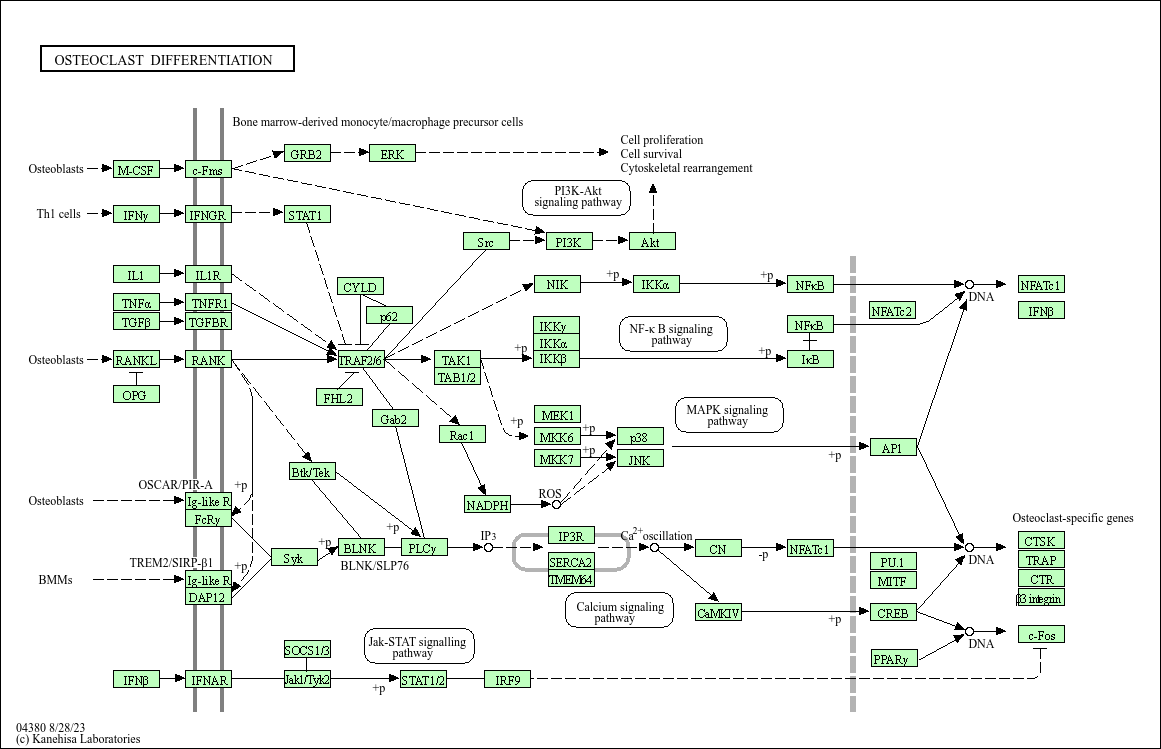
Core of basic research: Clarifies the molecular mechanism of osteoclast maturation from bone marrow monocyte/macrophage precursors. Osteoclasts mediate bone resorption, cooperating with osteoblasts to maintain bone homeostasis. The core regulatory axis is RANKL-RANK-OPG: RANKL secreted by osteoblasts/stromal cells binds RANK on precursors, activating downstream signaling; M-CSF binds c-Fms on precursors to promote proliferation and survival. RANK activation triggers NF-κB and MAPK (p38/ERK/JNK) pathways, inducing core transcription factor NFATc1. NFATc1 forms a complex with c-Fos to activate osteoclast-specific genes (TRAP, CatK, CTSK), driving differentiation. OPG, secreted by osteoblasts, competitively binds RANKL to inhibit differentiation. Research focuses on RANKL-RANK-OPG balance, NFATc1 activation, synergistic signals (TNF-α, IL-1), and pathway abnormalities in bone metabolic diseases (osteoporosis: overactive osteoclasts; osteopetrosis: defective osteoclasts).
Core key proteins: Osteoclast precursors, mature osteoclasts, RANKL (receptor activator of NF-κB ligand), RANK (receptor), OPG (osteoprotegerin), M-CSF (macrophage colony-stimulating factor), c-Fms (M-CSF receptor), NF-κB, MAPK (p38/ERK/JNK), NFATc1 (core transcription factor), c-Fos (transcriptional coactivator), TRAP (tartrate-resistant acid phosphatase, osteoclast marker), CatK (cathepsin K, key bone resorption enzyme), CTSK (calpastatin).
Core key proteins: Osteoclast precursors, mature osteoclasts, RANKL (receptor activator of NF-κB ligand), RANK (receptor), OPG (osteoprotegerin), M-CSF (macrophage colony-stimulating factor), c-Fms (M-CSF receptor), NF-κB, MAPK (p38/ERK/JNK), NFATc1 (core transcription factor), c-Fos (transcriptional coactivator), TRAP (tartrate-resistant acid phosphatase, osteoclast marker), CatK (cathepsin K, key bone resorption enzyme), CTSK (calpastatin).
Product list
-
{{item.title}}{{item.react}}{{item.applicat}}
Product list
Product name
Reactivity
Application
Related Resource Links


Related Promotional Journal Downloads


Explore Our Recommended Popular Products
More products
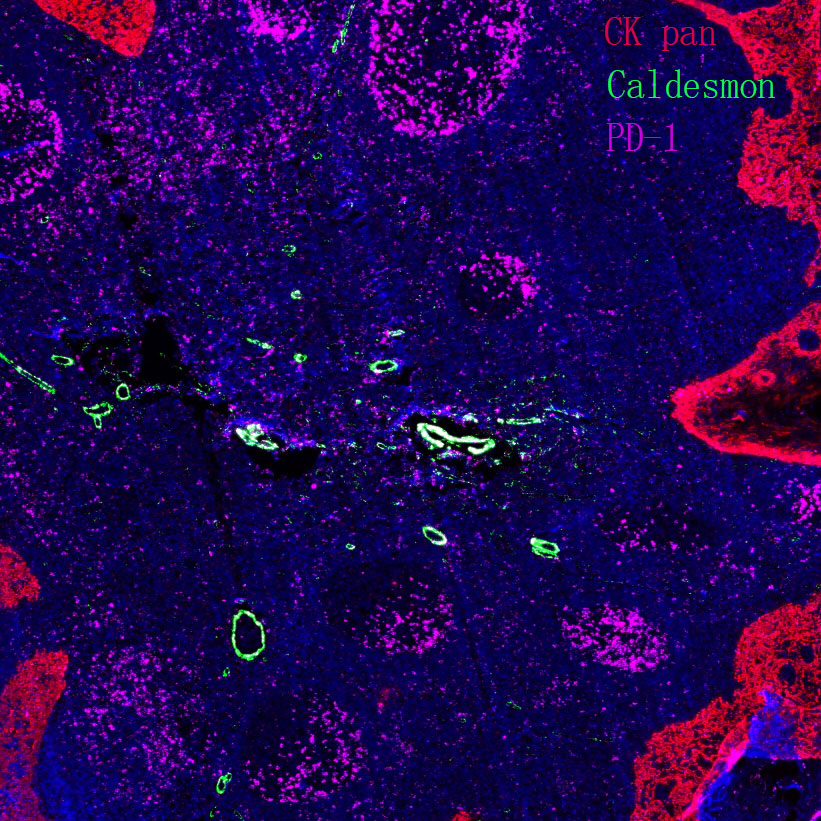
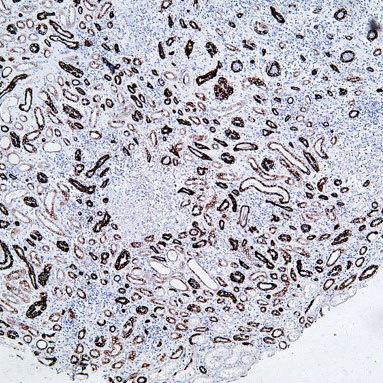
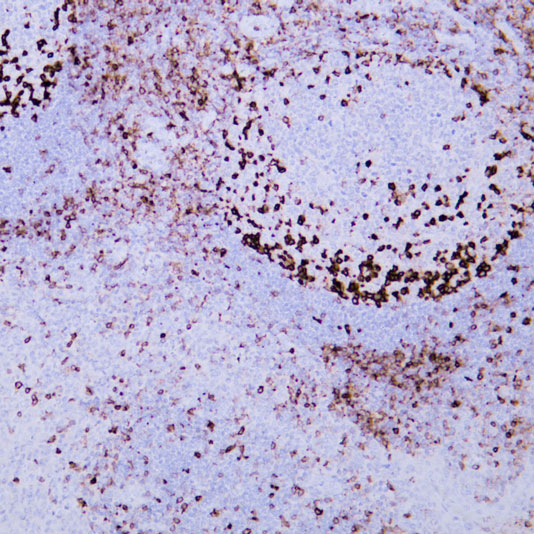
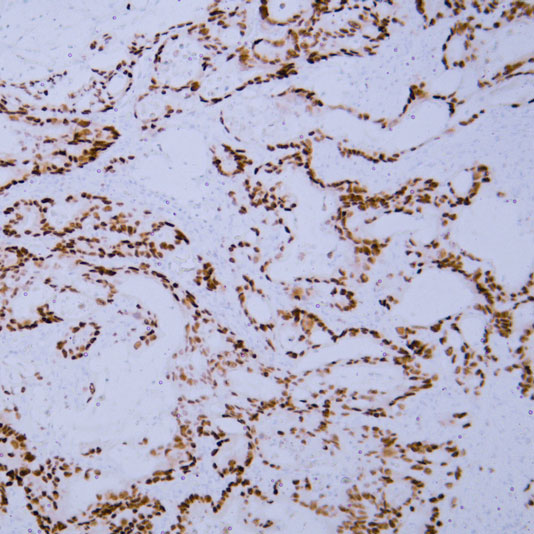

30,000+ high- quality products available online
Primary Antibodies, Secondary Antibodies, mIHC Kits, ELISA Kits, Proteins, Molecular Biology Products,Cell Lines,Reagents ...
Contact Us
-

400-801-6722
-

support@lamarck.cn
-


Order
-

Message