


Notch signaling pathway
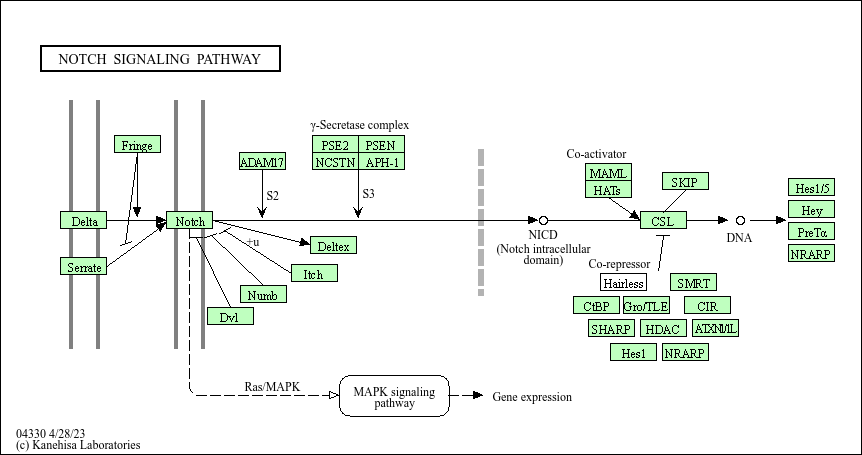
A pathway that transmits signals through direct contact between adjacent cells, its core molecules include Notch receptors (Notch1-4), ligands (Jagged1/2, DLL1/3/4), and downstream transcription factor CSL. The signal activation process is as follows: after ligand binding to the receptor, the extracellular segment of Notch is cleaved by proteases, followed by cleavage of the intracellular segment (NICD) by γ-secretase; NICD translocates to the nucleus and binds to CSL, activating the expression of target genes such as Hes and Hey. Its core function is to regulate cell fate determination, participating in neural stem cell differentiation, hematopoietic stem cell proliferation, and limb development during embryonic development, and maintaining tissue renewal (e.g., intestinal epithelium, skin) in adults. Pathway dysfunction is dual: excessive activation is associated with tumors such as T-cell acute lymphoblastic leukemia and lung cancer, while functional deficiency may lead to developmental malformations (e.g., congenital heart disease) and immunodeficiency.
Core function: Regulate cell fate determination and the balance between proliferation and differentiation through cell-cell receptor-ligand interactions, participating in embryonic development and tissue renewal. Key regulatory molecules: Notch1-4, Jagged1/2, DLL1/3/4, γ-secretase, CSL.
Core function: Regulate cell fate determination and the balance between proliferation and differentiation through cell-cell receptor-ligand interactions, participating in embryonic development and tissue renewal. Key regulatory molecules: Notch1-4, Jagged1/2, DLL1/3/4, γ-secretase, CSL.
Product list
-
{{item.title}}{{item.react}}{{item.applicat}}
Product list
Product name
Reactivity
Application
Related Resource Links


Related Promotional Journal Downloads


Explore Our Recommended Popular Products
More products
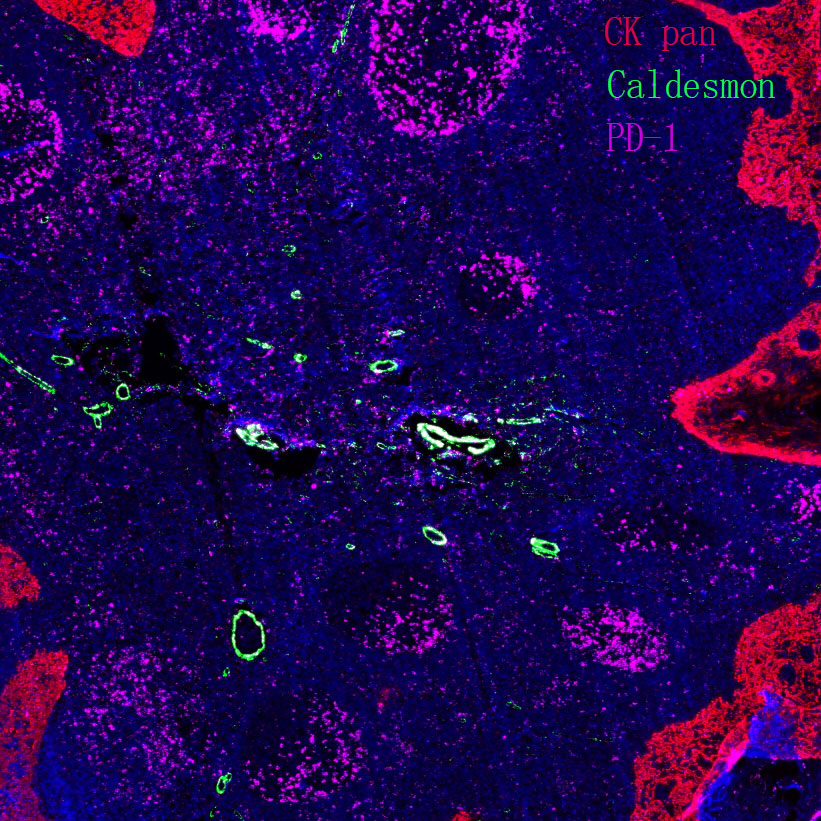

30,000+ high- quality products available online
Primary Antibodies, Secondary Antibodies, mIHC Kits, ELISA Kits, Proteins, Molecular Biology Products,Cell Lines,Reagents ...
Contact Us
-

400-801-6722
-

support@lamarck.cn
-


Order
-

Message