


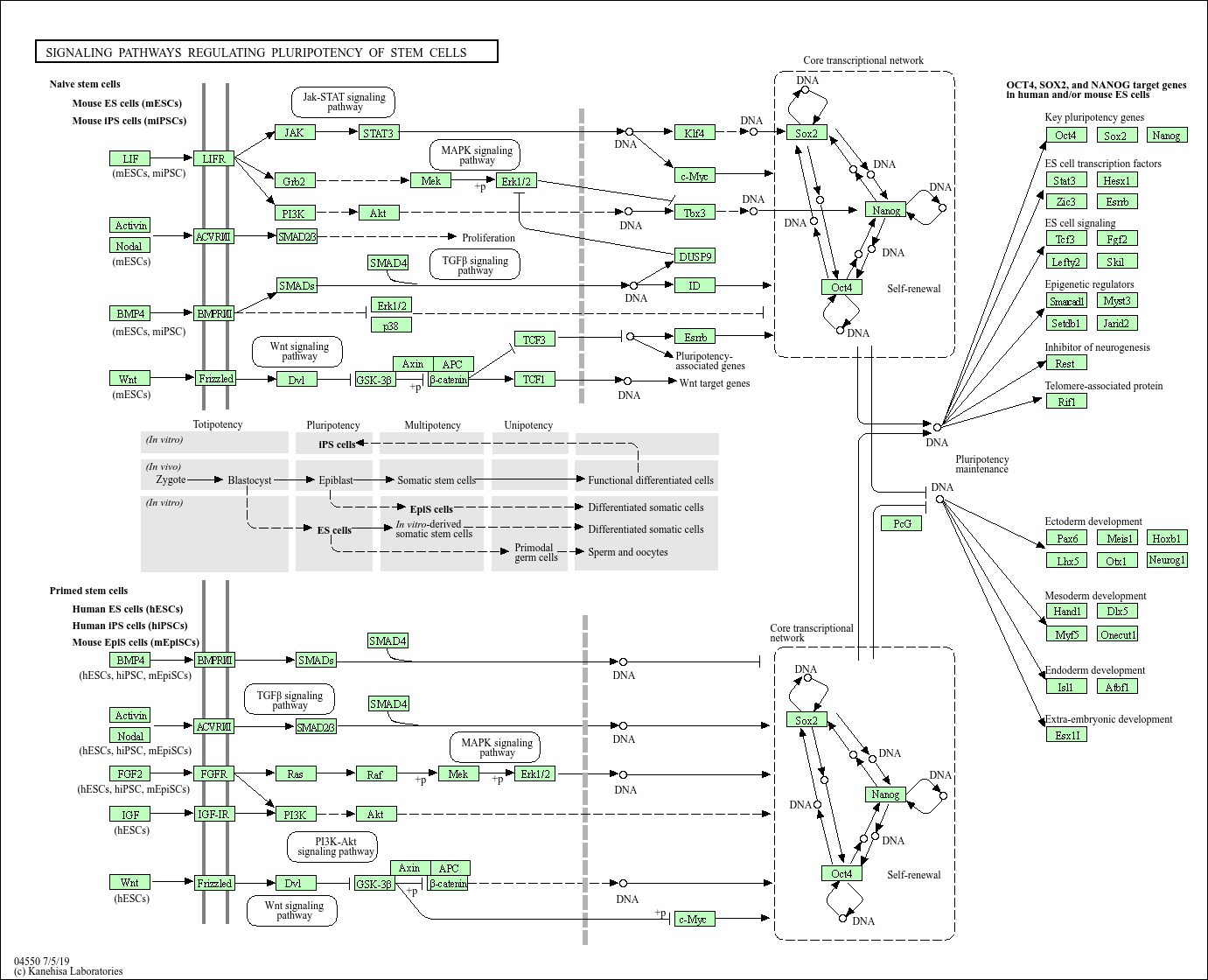
Signaling pathways regulating pluripotency of stem cells
Core of basic research: Clarifies the signaling network that maintains the self-renewal and pluripotent differentiation potential of embryonic stem cells (ESCs) and induced pluripotent stem cells (iPSCs), a core focus of stem cell biology and regenerative medicine. Four core regulatory pathways are involved: The Wnt pathway (activates β-Catenin nuclear translocation to regulate the expression of pluripotency genes such as Oct4 and Sox2); the PI3K-Akt pathway (inhibits apoptosis and promotes stem cell self-renewal); the JAK-STAT3 pathway (LIF binds to its receptor to activate STAT3, maintaining ESC pluripotency); the BMP pathway (activates Smad signaling to synergize with other pathways in regulating stem cell fate). These pathways maintain the balance between stem cell self-renewal and differentiation by regulating the core pluripotency transcription factor network (Oct4, Sox2, Nanog, Klf4, c-Myc). Research focuses include the synergistic and antagonistic regulatory logic of each pathway, the target gene network of pluripotency transcription factors, the stabilizing effect of epigenetic modifications (DNA methylation, histone modification) on pluripotency, and the association of pathway abnormalities with stem cell differentiation disorders (e.g., cancer stem cell formation) and regenerative medicine applications (optimization of iPSC induction efficiency).
Core key proteins: Pluripotency transcription factors (Oct4, Sox2, Nanog, Klf4, c-Myc, Lin28), Wnt pathway proteins (Wnt3a, β-Catenin, GSK3β, TCF/LEF), PI3K-Akt pathway proteins (PI3K, Akt, PTEN), JAK-STAT3 pathway proteins (LIF, LIFR, JAK1/2, STAT3), BMP pathway proteins (BMP4, BMPRⅠ/Ⅱ, Smad1/5/8), TGF-β/Activin pathway proteins (TGF-β, Smad2/3, regulating differentiation balance), epigenetic regulatory proteins (EZH2, SUV39H1, TET1, maintaining pluripotent epigenetic status).
Core key proteins: Pluripotency transcription factors (Oct4, Sox2, Nanog, Klf4, c-Myc, Lin28), Wnt pathway proteins (Wnt3a, β-Catenin, GSK3β, TCF/LEF), PI3K-Akt pathway proteins (PI3K, Akt, PTEN), JAK-STAT3 pathway proteins (LIF, LIFR, JAK1/2, STAT3), BMP pathway proteins (BMP4, BMPRⅠ/Ⅱ, Smad1/5/8), TGF-β/Activin pathway proteins (TGF-β, Smad2/3, regulating differentiation balance), epigenetic regulatory proteins (EZH2, SUV39H1, TET1, maintaining pluripotent epigenetic status).
Product list
-
{{item.title}}{{item.react}}{{item.applicat}}
Product list
Product name
Reactivity
Application
Related Resource Links



Related Promotional Journal Downloads


Explore Our Recommended Popular Products
More products

30,000+ high- quality products available online
Primary Antibodies, Secondary Antibodies, mIHC Kits, ELISA Kits, Proteins, Molecular Biology Products,Cell Lines,Reagents ...
Contact Us
-

400-801-6722
-

support@lamarck.cn
-


Order
-

Message