


Autophagy - other
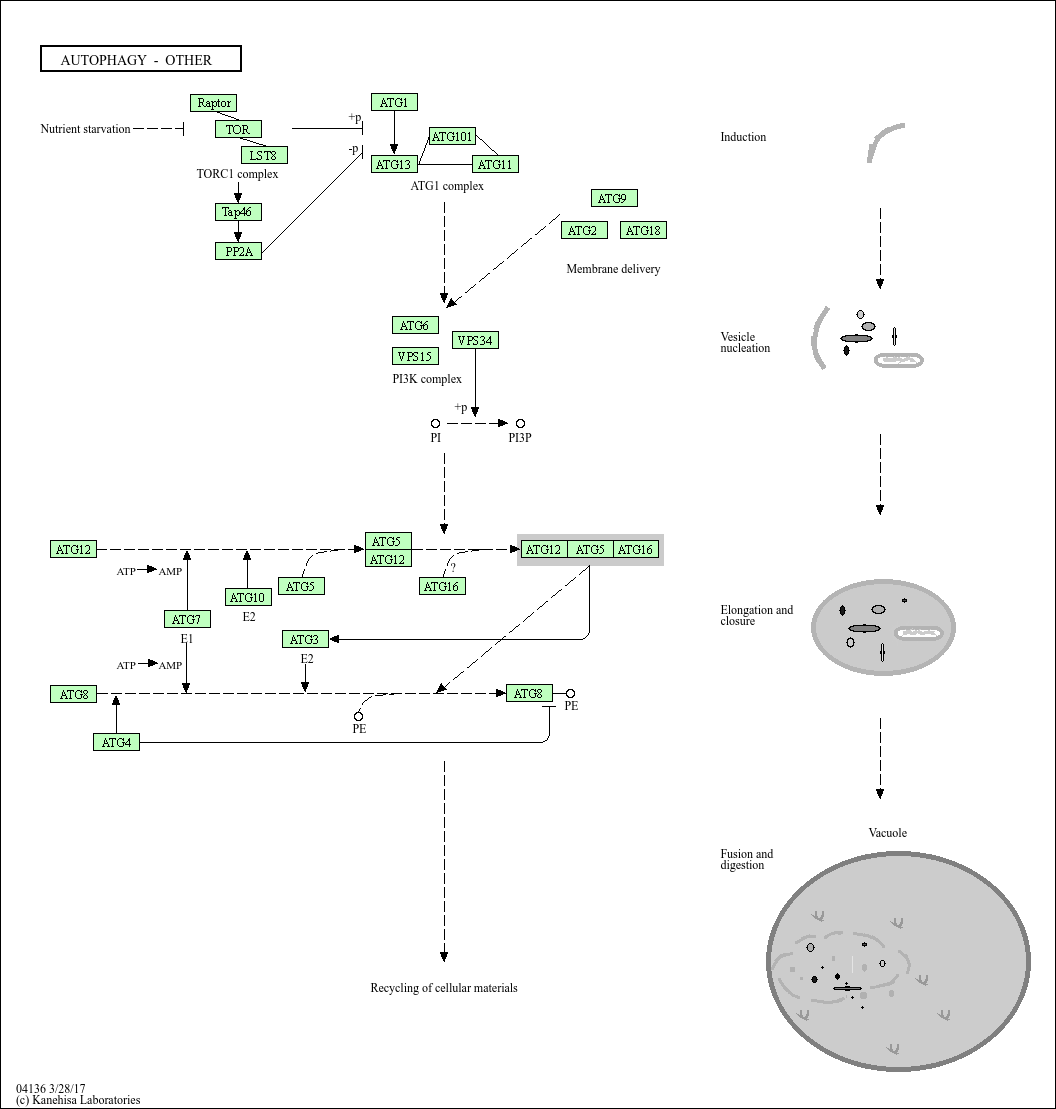
Core of basic research: Explores autophagic mechanisms in non-animal organisms (e.g., yeast, plants), revealing the evolutionary conservation and species-specificity of autophagic pathways. In yeast, core autophagy genes (ATG genes) were first identified; the mediated autophagic process (initiation-nucleation-elongation-maturation) is conserved with animal cells, and core complexes (Atg1 complex, Atg6-Vps34 complex) are functionally homologous. In plants, autophagy participates in stress responses (drought, pathogen infection) and senescence regulation; core Atg genes are conserved, but plant-specific regulatory factors exist (e.g., more ATG8 family subtypes). Research focuses include differences in core autophagic mechanisms among organisms, the role of species-specific regulatory factors, physiological functions of autophagy in lower organisms (e.g., yeast survival strategies under nutrient deprivation), and evolutionary associations of cross-species autophagic mechanisms.
Core key proteins:Yeast: Atg1 complex (Atg1, Atg13, Atg17), Atg6-Vps34 complex (Atg6, Vps34, Vps15), Atg8, Atg5-Atg12 complex, vacuole (yeast autophagic degradation site);Plants: ATG family homologous proteins (ATG5, ATG7, ATG8, ATG12), plant-specific autophagy-related proteins (e.g., NBR1, ATG18a), vacuole (plant autophagic degradation site).
Core key proteins:Yeast: Atg1 complex (Atg1, Atg13, Atg17), Atg6-Vps34 complex (Atg6, Vps34, Vps15), Atg8, Atg5-Atg12 complex, vacuole (yeast autophagic degradation site);Plants: ATG family homologous proteins (ATG5, ATG7, ATG8, ATG12), plant-specific autophagy-related proteins (e.g., NBR1, ATG18a), vacuole (plant autophagic degradation site).
Product list
-
{{item.title}}{{item.react}}{{item.applicat}}
Product list
Product name
Reactivity
Application
Related Resource Links

Related Promotional Journal Downloads


Explore Our Recommended Popular Products
More products

30,000+ high- quality products available online
Primary Antibodies, Secondary Antibodies, mIHC Kits, ELISA Kits, Proteins, Molecular Biology Products,Cell Lines,Reagents ...
Contact Us
-

400-801-6722
-

support@lamarck.cn
-


Order
-

Message